
Social Media in 2026: Key Trends and Platform Evolution
Published: 1/29/2026
Social media in 2026 continues its substantial expansion with 5.66 billion users worldwide, representing 69% of the global population. This digital revolution shows no signs of slowing down, with 259 million new users added in the past year alone, marking a solid 4.8% annual growth rate.
The environment has changed dramatically as platforms integrate advanced technologies like artificial intelligence, augmented reality, and metaverse experiences. Emerging platforms such as Bluesky are challenging established giants, while users now actively engage across 7-8 different platforms on average.
This comprehensive analysis covers the current state of social media, emerging trends, technological innovations, and practical strategies for businesses and individuals managing this dynamic digital environment.
Key Insights for Social Media in 2026
Market Growth: Social media continues expanding with 5.66 billion users and 4.8% annual growth, making it the largest global communication network in human history.
AI Integration: Artificial intelligence enhances content creation and ad targeting while requiring human oversight to maintain authenticity and brand voice consistency.
Platform Diversification: Users are active on 7-8 different platforms, with emerging players like Bluesky gaining significant traction among early adopters seeking alternatives.
Video Dominance: Short-form video content accounts for over 60% of social media consumption across all age groups and platforms.
Commerce Evolution: Social commerce market projected to reach $1.66 trillion with 31% growth rate, changing how businesses sell products online.
The Social Media Market: Understanding the Numbers
Global User Statistics and Growth Patterns
Social media's reach has become truly global with 5.66 billion users representing 69% of the world's population. This massive user base continues growing at 4.8% annually, adding 259 million new users in the past 12 months. Internet penetration has reached 73.2% globally, with over 6 billion people now online.
The average user spends 2 hours and 23 minutes daily on social media platforms. Users maintain accounts across 7-8 different platforms, indicating a shift toward platform diversification rather than reliance on single networks.
Video content dominates consumption patterns, accounting for over 60% of total social media engagement. This preference spans all age groups, with short-form videos particularly popular among younger demographics.
Demographic Breakdown and Usage Patterns
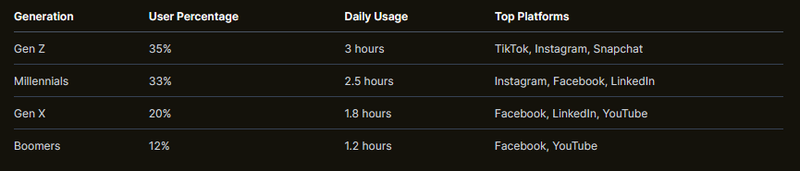
Generation Z leads social media adoption with 35% of total users and 3 hours of daily usage. These digital natives have grown up with social media and expect seamless, personalized experiences across platforms.
Millennials represent 33% of users with 2.5 hours daily usage. This generation drives much of the platform's commercial activity, from influencer marketing to social commerce purchases.
Generation X accounts for 20% of users, averaging 1.8 hours daily. They prefer Facebook and LinkedIn for networking and news consumption.
Baby Boomers now represent 12% of users with 1.2 hours daily usage. Their adoption rate has grown to 58%, driven by desires to connect with family and stay informed.
Urban users are 1.7 times more likely to use multiple platforms compared to rural users. This pattern reflects infrastructure availability and cultural factors that influence social media adoption rates.
Major Social Media Platforms: The Digital Giants
Facebook: Maintaining Leadership Position
Facebook remains the largest social media platform with 3.07 billion monthly active users. Users spend an average of 19 hours and 47 minutes monthly on the platform, making it highly valuable for advertisers and businesses.
The platform serves as a comprehensive social networking hub featuring messaging, groups, events, and business pages. Facebook's strength lies in its broad demographic appeal and robust advertising infrastructure.
Recent 2026 updates focus on community building features and improved privacy controls. The platform has also integrated more AI-powered content recommendations while giving users greater control over their feeds.
Instagram: Visual Content and Commerce Hub
Instagram boasts 3 billion monthly active users, with particularly strong engagement among the 18-34 age demographic. Users spend an average of 15 hours and 50 minutes monthly consuming visual content and stories.
The platform excels at lifestyle content, brand marketing, and e-commerce integration. Instagram Reels competes directly with TikTok for short-form video content, while Stories provide ephemeral sharing options.
Shopping features have been enhanced, with in-app purchasing capabilities and AR try-on features driving social commerce growth. Brands report higher conversion rates through Instagram shopping compared to traditional e-commerce channels.
YouTube: Video Content Authority
YouTube maintains its position as the primary long-form video platform with 2.7 to 2.9 billion monthly active users. The platform appeals to broad age ranges and serves both entertainment and educational content needs.
YouTube Shorts has gained substantial traction, competing with TikTok for short-form video attention. The platform successfully balances long-form content with quick, engaging snippets.
Creator monetization options continue expanding, with multiple revenue streams available including ads, memberships, merchandise, and Super Chat features. This comprehensive ecosystem attracts content creators seeking sustainable income opportunities.
TikTok: Short-Form Video Innovation Leader
TikTok has reached 1.56 to 1.92 billion monthly active users, with particularly strong dominance among Generation Z. The platform's algorithm-driven content discovery has influenced how all other platforms approach content recommendation.
The platform's editing tools and effects continue setting industry standards for short-form video creation. TikTok's influence extends beyond the platform, with trends often spreading to other social media networks.
Business features have expanded substantially, with TikTok Shop enabling direct commerce integration. Brands use TikTok for authentic marketing campaigns that feel native to the platform's creative culture.
LinkedIn: Professional Networking Standard
LinkedIn serves 950 million members as the primary professional networking platform. The platform focuses on career development, business networking, and B2B marketing opportunities.
Content marketing through LinkedIn has become essential for businesses targeting professional audiences. Articles, posts, and video content perform well when providing genuine value to professional communities.
Job searching and recruitment functions remain core platform strengths. Enhanced AI matching helps connect candidates with opportunities while supporting recruiters in finding qualified talent.
Messaging Platforms: WhatsApp and WeChat
WhatsApp maintains 2.78 billion users globally, serving as a primary communication tool in many regions. The platform's focus on privacy and end-to-end encryption appeals to users concerned about data security.
WeChat dominates the Chinese market with 1.33 billion users, functioning as a super app that combines messaging, payments, shopping, and services. This integration model influences global platform development strategies.
Both platforms demonstrate the importance of regional preferences and regulatory environments in shaping social media adoption patterns.
Emerging Platforms: The New Wave of Social Innovation
Bluesky: Decentralized Social Networking Revolution
Bluesky represents a major shift toward decentralized social networking architecture. Built on the AT Protocol, the platform offers users greater control over their algorithms and content experiences.
The decentralized approach addresses many concerns about traditional social media platforms, including censorship, algorithmic manipulation, and data ownership. Users can choose their own algorithms or content moderation approaches.
Early adoption has been strong among tech-savvy users and those seeking alternatives to traditional microblogging platforms. Bluesky's developer-friendly ecosystem encourages innovation and customization.
Community-driven moderation allows users to participate in creating platform rules rather than relying solely on corporate policies. This approach fosters greater user investment in platform success and community health.
BluePilot: AI-Enhanced Social Media Management
BluePilot emerges as a comprehensive AI assistant for social media management across multiple platforms, including Bluesky integration. The tool enhances content creation, scheduling, and analytics for businesses and individual creators.
Key features include automated content suggestions, optimal posting time recommendations, and cross-platform content adaptation. The AI analyzes engagement patterns to suggest improvements and identify trending topics.
Businesses report considerable time savings and improved engagement rates when using AI-powered social media tools. However, successful implementation requires maintaining authentic brand voice and human oversight.
Integration capabilities span major platforms, allowing unified management of social media presence. This comprehensive approach helps businesses maintain consistent messaging across diverse audiences.
Platform Diversification Trends
Users increasingly maintain active presences across multiple platforms rather than concentrating on single networks. This diversification strategy helps creators and businesses reach different audience segments with tailored content.
Niche community platforms gain traction by serving specific interests or demographics. These specialized networks often provide higher engagement rates compared to broader platforms.
Regional social media innovations continue emerging, particularly in markets with unique cultural or regulatory requirements. Understanding local preferences becomes important for global brand success.
Web3 and blockchain-based social networks experiment with new monetization models and user ownership concepts. While still nascent, these platforms examine alternatives to traditional advertising-based revenue models.
Technology Changing Social Media Experiences
Artificial Intelligence: Content Creation and Personalization
AI integration in social media has reached sophisticated levels. Content creation tools help users generate images, brainstorm ideas, and craft engaging headlines, democratizing high-quality content production.
Machine learning enhances ad targeting capabilities, allowing businesses to reach specific audience segments with relevant messaging. AI analyzes user behavior patterns to predict interests and purchasing intent.
However, human oversight remains important for maintaining authenticity and brand voice consistency. Over-reliance on AI can lead to generic content that fails to connect with audiences on emotional levels.
Social listening tools powered by AI provide real-time insights into brand sentiment and trending topics. These capabilities help businesses respond quickly to opportunities and address potential issues proactively.
Augmented Reality: Enhancing Real-World Interactions
AR technology has moved beyond simple filters to create meaningful interactive experiences. Shopping applications allow users to try products virtually before purchasing, reducing return rates and increasing conversion confidence.
Meta's "Display" smart glasses and competing products from other manufacturers are driving mainstream AR adoption. These devices integrate social media experiences with real-world environments seamlessly.
Snapchat's "Specs" continue evolving with new interactive capabilities and improved hardware specifications. The platform's AR innovation influences how other networks approach immersive content creation.
Marketing applications for AR include virtual product demonstrations, location-based experiences, and interactive storytelling campaigns. Brands report higher engagement rates with AR content compared to traditional media formats.
Metaverse Integration: Virtual Social Experiences
The metaverse represents a convergence of virtual reality, social networking, and digital commerce. Market projections indicate 5.2% compound annual growth rate from 2026-2033 as adoption accelerates.
Key applications include immersive advertising experiences, virtual events, social gaming, and digital asset trading. Leading companies like Meta, Decentraland, and emerging platforms compete to define metaverse standards.
Virtual events have gained traction, offering global accessibility and unique interactive possibilities impossible in physical venues. Conferences, concerts, and social gatherings increasingly incorporate metaverse elements.
Business opportunities include virtual storefronts, branded experiences, and new forms of customer engagement. Early adopters report strong user engagement and brand differentiation benefits.
Algorithm Evolution and User Control
Personalization algorithms continue improving while providing users greater transparency and control options. Platforms respond to user demands for understanding how content recommendations are generated.
Content discovery mechanisms balance personalization with serendipity, helping users discover new interests while serving relevant content. Machine learning models analyze engagement patterns to optimize recommendation accuracy.
User empowerment features allow individuals to customize their algorithmic feeds, block specific content types, and adjust recommendation parameters. This control reduces user frustration and improves platform satisfaction.
Cross-platform algorithm integration enables consistent experiences as users move between different social media networks. Data portability initiatives support user control over their digital identities and preferences.
Challenges Shaping Social Media's Future
Data Privacy and Surveillance Concerns
Social media platforms collect vast amounts of personal data through AI systems and user interactions. This data collection enables sophisticated targeting but raises privacy concerns among users and regulators.
Surveillance capabilities have expanded dramatically, with platforms tracking user behavior across websites and applications. Users increasingly demand transparency about data collection practices and usage policies.
Regulatory responses vary globally, with some regions implementing strict data protection laws while others take more permissive approaches. Platforms must manage complex compliance requirements across multiple jurisdictions.
Balancing personalization benefits with privacy protection remains a key challenge. Users want relevant content and experiences but worry about excessive data collection and potential misuse.
Misinformation and Information Quality
Misinformation represents a major global threat to public health and democratic processes. Social media's rapid information spread can amplify false or misleading content before fact-checking mechanisms engage.
Automated bots and coordinated campaigns exploit social media algorithms to spread misinformation at scale. These sophisticated operations often target controversial topics to maximize engagement and reach.
Algorithmic promotion of sensational content for engagement optimization can inadvertently amplify misinformation. Platforms struggle to balance user engagement with information quality and accuracy.
Limited platform commitment to comprehensive solutions reflects business model tensions between engagement-driven revenue and information quality. Effective misinformation combat requires substantial resource investment and may reduce short-term engagement metrics.
Algorithmic Bias and Social Equity
AI systems used in social media can perpetuate and amplify existing social inequities through biased training data and algorithm design. These biases affect content visibility, recommendation systems, and user experiences.
Content recommendation algorithms may underrepresent minority voices or promote content that reinforces stereotypes. This algorithmic bias can limit exposure to diverse perspectives and experiences.
Platforms increasingly invest in algorithmic fairness research and bias detection systems. However, completely eliminating bias remains challenging given the complexity of social dynamics and cultural differences.
User education about algorithm influence helps individuals understand how their social media experiences are shaped by automated systems. Greater awareness supports more informed platform usage and content consumption decisions.
Mental Health Impacts and Youth Protection
Rising rates of anxiety and depression among young people correlate with increased social media usage. Constant social comparison, cyberbullying, and addictive design features contribute to mental health challenges.
Cyberbullying and online harassment create hostile environments that can severely impact user wellbeing. Platform moderation systems struggle to detect and address all forms of harmful behavior effectively.
Sleep disruption from excessive social media usage affects physical and mental health outcomes. Blue light exposure and constant notification alerts interfere with natural sleep patterns and recovery.
Platform responsibility for user wellbeing is increasingly recognized through design changes, usage monitoring tools, and mental health resources. Collaboration with mental health experts helps develop more effective intervention strategies.
Business Opportunities in Social Media 2026
Social Commerce: The $1.66 Trillion Revolution
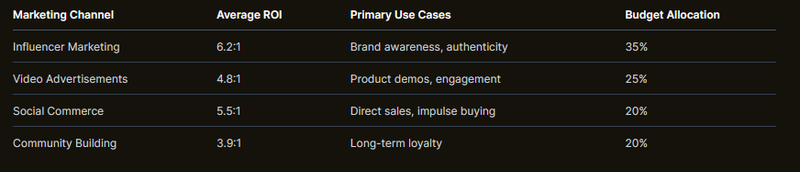
Social commerce has exploded into a $1.66 trillion global market, growing at 31% compound annual growth rate. This integration of shopping and social experiences changes how consumers discover and purchase products.
Shoppable videos drive exceptionally high engagement and conversion rates compared to traditional e-commerce approaches. Users can purchase products directly within video content without leaving their social media platform.
In-app purchasing capabilities eliminate friction from the customer journey, reducing cart abandonment and increasing impulse purchases. Seamless payment integration supports immediate transaction completion.
AI and AR personalization enhance shopping experiences by suggesting relevant products and enabling virtual try-on features. These technologies help consumers make confident purchasing decisions while reducing return rates.
Platform-specific commerce features require tailored strategies for optimal results. Each platform offers unique shopping tools and audience behaviors that influence content creation and marketing approaches.
Influencer Marketing: $33 Billion Industry Evolution
Influencer marketing has evolved into a $33 billion industry, with brands increasingly allocating larger portions of their advertising budgets to creator partnerships. This shift reflects the effectiveness of authentic, personal recommendations over traditional advertising.
Micro and nano-influencers deliver higher engagement rates and more authentic audience connections compared to mega-influencers. Brands focus on building long-term partnerships with creators who align with their values and target audiences.
Performance-driven marketing approaches emphasize measurable outcomes like conversions and sales rather than just follower counts and engagement metrics. Advanced analytics help brands identify the most effective influencer partnerships.
Cross-platform content strategies maximize influencer partnership value by adapting content for multiple social media networks. This approach increases reach while maintaining authentic creator voice across different platforms.
AI-powered content creation tools help influencers produce higher quality content more efficiently. However, successful creators balance technological assistance with authentic personal storytelling that resonates with their audiences.
Video Commerce and Live Streaming
Live streaming sales events create urgency and social proof that drive immediate purchasing decisions. Real-time interaction between creators and viewers builds trust and addresses customer concerns instantly.
Prerecorded video product showcases provide detailed demonstrations and use cases that help customers understand product benefits. High-quality video content impacts purchasing confidence and conversion rates.
Interactive video shopping experiences allow viewers to click on products within videos for immediate purchase options. This integration reduces friction between discovery and transaction completion.
Behind-the-scenes content builds brand authenticity and emotional connections with customers. Users increasingly prefer genuine, unpolished content over highly produced marketing materials.
User-generated content in marketing strategies benefits from authentic customer experiences to influence potential buyers. Real customer reviews and demonstrations carry more credibility than brand-created content.
Brand Engagement Evolution
Authenticity trumps polished perfection as consumers prefer genuine brand interactions over carefully crafted marketing messages. Brands succeed by showing real people, processes, and values rather than idealized representations.
Community-driven brand building focuses on creating valuable experiences and fostering genuine connections between customers. Successful brands act as community facilitators rather than traditional advertisers.
Social listening provides insights into customer preferences, concerns, and trends. Real-time feedback helps brands adapt quickly to changing market conditions and customer needs.
Identity-driven content that reflects shared values resonates strongly with modern consumers. Brands that authentically support causes and values build deeper emotional connections with their audiences.
Interactive storytelling techniques engage audiences as active participants rather than passive consumers. Polls, questions, and user-generated content campaigns create collaborative brand experiences.
Advertising and Paid Social Media
Global social media advertising spend has reached $219 billion, representing one-third of total digital advertising investment. This massive market continues growing as platforms improve targeting capabilities and measurement accuracy.
AI-enhanced targeting uses machine learning to identify optimal audiences and predict campaign performance. Advanced algorithms analyze user behavior patterns to serve relevant advertisements at optimal times.
Creative format innovations include interactive ads, augmented reality experiences, and shoppable video content. These engaging formats achieve higher click-through rates and conversion performance compared to traditional display advertising.
Cross-platform campaign management tools help businesses maintain consistent messaging while optimizing for each platform's unique characteristics and audience behaviors. Unified analytics provide comprehensive campaign performance insights.
ROI measurement improvements through advanced attribution modeling help businesses understand the true impact of their social media advertising investments. Better measurement supports more effective budget allocation decisions.
Future Predictions for Social Media Evolution
Short-Term Outlook: 2026-2027
Video content dominance will continue expanding with new interactive formats including live shopping, collaborative content creation, and immersive storytelling experiences. Platforms compete to offer the most engaging video creation and consumption tools.
AR glasses are approaching mainstream adoption with improved hardware capabilities and expanded application ecosystems. Early adopters drive demand for AR-integrated social media experiences that blend digital and physical interactions.
AI content creation tools become standard platform features rather than third-party additions. Native AI integration helps users generate ideas, edit content, and optimize posting strategies without leaving their preferred social media apps.
Platform consolidation accelerates as smaller networks struggle to compete with established giants. However, feature convergence means successful platforms increasingly offer similar capabilities across video, messaging, and commerce functions.
Increased regulation and privacy controls reshape platform operations and user experiences. Compliance requirements drive innovation in privacy-preserving technologies while maintaining personalized user experiences.
Medium-Term Projections: 2027-2030
Metaverse social experiences transition from novelty to commonplace as hardware becomes more accessible and comfortable. Virtual reality social interactions supplement rather than replace traditional social media engagement.
Voice and audio content grow as users seek more intimate and convenient content consumption methods. Podcast-style social content and voice messaging become primary communication formats for busy users.
Blockchain-based social platforms gain mainstream adoption by offering user ownership of content and data. Decentralized networks provide alternatives to traditional platform control while enabling new monetization models.
Advanced AI personalities and virtual influencers blur lines between human and artificial content creation. These AI entities develop loyal followings while raising questions about authenticity and disclosure requirements.
Seamless cross-platform content sharing eliminates friction between different social media networks. Users expect unified experiences that allow content creation once and distribution everywhere.
Long-Term Vision: Beyond 2030
Brain-computer interface integration possibilities emerge as experimental technologies mature. Direct neural connections to social media platforms could change how humans interact with digital content and each other.
Fully immersive virtual social environments become primary spaces for certain types of social interaction. Physical and digital reality integration reaches levels that change human social behavior patterns.
AI-human collaboration in content creation reaches sophisticated levels where artificial intelligence and human creativity combine seamlessly. This partnership model enhances human capabilities rather than replacing human involvement.
Sustainable and ethical social media practices become standard requirements rather than optional features. Environmental impact, user wellbeing, and social responsibility drive platform design and business model decisions.
Global digital identity and reputation systems enable portable social credentials across platforms and applications. Users maintain consistent digital identities while choosing platforms that best serve their current needs.
Practical Success Strategies for 2026
Business and Marketing Excellence
Content Strategy Development: Focus on authentic, creator-led storytelling that resonates with your target audience's values and interests. Embrace lo-fi, unpolished content styles that feel genuine rather than overly produced marketing materials.
Develop cross-platform content strategies that maintain consistent brand voice while adapting to each platform's unique characteristics and audience expectations. Create content frameworks that can be efficiently adapted across multiple social media networks.
Invest in video content creation capabilities including equipment, editing software, and team training. Video content consistently outperforms other formats across all major platforms and demographic segments.
Implement comprehensive social listening programs to identify trends, monitor brand sentiment, and discover content opportunities. Real-time insights help businesses respond quickly to market changes and customer feedback.
Platform Selection Strategy: Identify where your target audience spends time and focus resources on those high-impact platforms rather than trying to maintain presence everywhere. Quality engagement on fewer platforms outperforms minimal presence across many networks.
Diversify your social media presence across 3-5 key platforms to reduce dependency risk while maintaining manageable content creation requirements. Platform diversification protects against algorithm changes and policy updates.
Consider emerging platforms like Bluesky for early adoption advantages and access to engaged early-user communities. First-mover advantages on new platforms can provide organic reach opportunities.
Test new features and formats regularly to stay current with platform innovations and algorithm preferences. Platforms often promote accounts that actively use new features during launch periods.
AI Integration Best Practices: Use AI tools for content ideation, headline optimization, and audience research while maintaining human oversight for brand voice consistency and strategic decision-making.
Benefit from AI for advertising targeting and audience insights, but combine automated optimization with human strategy and creative direction. AI enhances human capabilities rather than replacing strategic thinking.
Experiment with AI-powered customer service tools for initial response and basic inquiry handling. Human escalation paths ensure complex issues receive appropriate attention while AI handles routine questions efficiently.
Individual Creator Success Strategies
Personal Brand Building: Define your unique value proposition and content niche based on your expertise, interests, and audience needs. Consistency in messaging and content quality builds trust and recognition over time.
Maintain authentic engagement with your community by responding to comments, participating in discussions, and showing genuine interest in your followers' lives and concerns.
Share behind-the-scenes content and personal stories that help your audience connect with you as a real person. Authenticity creates stronger emotional connections than polished, perfect content presentations.
Collaborate with other creators in your niche to expand reach and provide value through diverse perspectives. Cross-promotion and collaborative content benefit all participants when done thoughtfully.
Privacy and Safety Measures: Review and update privacy settings regularly as platforms introduce new features and data collection methods. Stay informed about platform policies and your rights as a user.
Be mindful of personal information sharing in content and interactions. Consider the long-term implications of shared information and how it might be used by platforms or other users.
Use strong authentication methods including two-factor authentication and unique passwords for each platform account. Account security protects both personal information and content creation investments.
Report problematic accounts and content to help maintain healthy community environments. Active user participation in platform moderation improves experiences for everyone.
Content Creation Excellence: Focus on quality over quantity by creating content that provides genuine value to your audience. Consistent value delivery builds loyal audiences more effectively than frequent posting of mediocre content.
Develop signature content formats that become associated with your brand and make your content instantly recognizable. Consistent formatting helps audiences know what to expect from your content.
Engage with current trends while maintaining your authentic voice and brand consistency. Trend participation can increase visibility when done authentically rather than forcing unnatural content connections.
Use platform analytics to understand what content performs best with your audience and optimize your content strategy accordingly. Data-driven content creation improves results over time while maintaining authentic engagement.
Build genuine community through consistent interaction, valuable content, and authentic engagement with your audience's interests and concerns. Community building creates long-term success beyond algorithm changes and platform shifts.
Frequently Asked Questions
What are the most important social media trends for businesses in 2026?
The most important trends include AI-enhanced content creation, social commerce integration, authentic creator partnerships, video-first content strategies, and cross-platform presence management. Businesses should focus on building genuine community connections while using technological tools to enhance efficiency and personalization.
How has user behavior changed on social media platforms in 2026?
Users now maintain active presences across 7-8 different platforms, prefer authentic and unpolished content over highly produced materials, spend over 60% of their time consuming video content, and expect seamless shopping experiences integrated into their social media browsing. Privacy consciousness has also increased.
Which emerging platforms should businesses consider for early adoption?
Bluesky leads emerging platform adoption with its decentralized approach and growing user base among tech-savvy early adopters. Other platforms worth monitoring include niche community networks serving specific industries or interests, regional platforms in expanding markets, and Web3-based social networks experimenting with new user ownership models.
How can businesses balance AI automation with authentic human engagement?
Successful businesses use AI for content ideation, scheduling optimization, and basic customer service while maintaining human oversight for strategic decisions, brand voice consistency, and complex customer interactions. The key is enhancing human capabilities with AI rather than replacing human judgment and creativity entirely.
What metrics should businesses prioritize when measuring social media success in 2026?
Focus on engagement quality over quantity, conversion rates from social commerce initiatives, community growth and retention rates, brand sentiment analysis, and return on investment from influencer partnerships. Traditional metrics like follower counts are less important than meaningful engagement and business outcomes.