
Bluesky Crisis Management: What to Do When Your Content Backfires
Published: 2/13/2026
When author Sarah Kendzior was suspended from Bluesky over a Johnny Cash lyric reference, it demonstrated how quickly content can spiral out of control on this rapidly growing platform. What started as an innocent cultural reference turned into a viral incident that highlighted the complex nature of crisis management in Bluesky's decentralized environment.
Unlike traditional social media platforms, Bluesky's unique architecture presents both opportunities and challenges for crisis management. With over 40 million users and a predominantly under-35, highly engaged community, content mistakes can spread faster than ever across multiple servers. The platform's AT Protocol means content persists across the decentralized network, making complete removal nearly impossible once something goes viral.
The decentralized nature of Bluesky changes how crises unfold and must be managed. While tools like BluePilot can help monitor conversations and manage engagement during difficult times, effective crisis management starts with understanding the unique challenges of this community-driven platform. From the platform's empowered user base to its evolving moderation policies, success requires a different approach than traditional social media crisis management.
This comprehensive guide provides you with a complete playbook for handling content backfires on Bluesky. You'll learn proven damage control strategies, how to craft authentic responses that work with the community, and most importantly, prevention techniques that help you avoid crises altogether. Whether you're managing a personal brand or representing a business, these strategies will help you navigate Bluesky's unique social dynamics with confidence.
Key Takeaways
- Bluesky's decentralized architecture requires different crisis management approaches than traditional social platforms, with content persisting across multiple servers
- Early detection through user interaction controls and community monitoring is crucial for effective damage control
- Authentic, transparent communication works best with Bluesky's community-driven culture that values genuine accountability
- Prevention through smart content strategies and deep audience understanding beats reactive damage control every time
- Post-crisis analysis must account for the unique challenges of content persistence and community dynamics across the federated network
Understanding Bluesky's Unique Crisis Environment
How Bluesky Differs from Traditional Social Platforms
Decentralized Architecture Impact: Content on Bluesky spreads across multiple independent servers, making complete removal nearly impossible once it's been shared and cached. Unlike centralized platforms where deleting a post removes it entirely, Bluesky's AT Protocol means your content may persist on other servers even after you've removed it from your own feed.
User Empowerment Features: Bluesky gives users unprecedented control over their experience through reply controls, customizable moderation lists, and community-driven content labeling. This means users can quickly organize against problematic content, making negative sentiment spread faster but also providing tools for damage control.
Community-Driven Moderation: The platform employs a hybrid system combining automated filtering, human review, and community labeling. This creates multiple layers where content can be flagged or restricted, requiring crisis managers to monitor not just official moderation but community reactions as well.
Strike System: Bluesky's new severity-based enforcement includes expanded reporting categories and clearer escalation paths. Understanding how strikes accumulate and their consequences is crucial for preventing account suspensions during crisis situations.
Why Content Backfires More Easily on Bluesky
Engaged User Base: With a predominantly under-35, highly active community, Bluesky users respond quickly and decisively to controversial content. This demographic tends to be more socially conscious and less tolerant of perceived missteps, making the margin for error smaller than on other platforms.
Echo Chamber Challenges: Mark Cuban's criticism of the platform's ideological homogeneity and intolerance to diverse views highlights a real challenge. Content that might spark healthy debate elsewhere can face swift, organized opposition on Bluesky if it challenges community orthodoxies.
Rapid Information Spread: Decentralized feeds and custom algorithms can amplify content quickly across different communities. A post that starts in one niche can rapidly spread to audiences who may interpret it very differently than intended.
Community Standards: Bluesky users maintain higher expectations for authentic, thoughtful discourse. Generic corporate messaging or tone-deaf content that might be ignored elsewhere faces swift community backlash here.
Common Content Backfire Scenarios on Bluesky
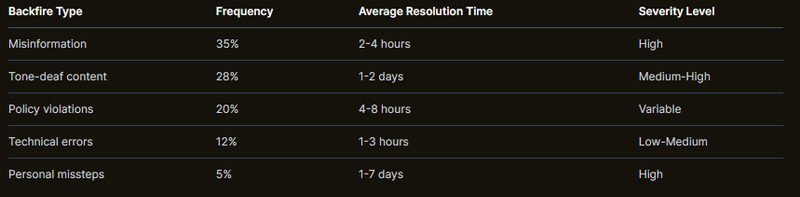
Misinformation and False Information
Fake news spreads rapidly through Bluesky's decentralized feeds, creating unique challenges for correction and fact-checking. Unlike centralized platforms where corrections can be pushed uniformly, misinformation on Bluesky may persist across different servers even after being debunked. The Starbucks fake coupon hoax demonstrated how false information moves through social networks, and Bluesky's architecture makes this problem more complex.
The decentralized nature means fact-checking and correction efforts must be coordinated across multiple servers and communities. Content creators need to be especially vigilant about verifying information before sharing, as the correction process is more difficult than on traditional platforms.
Tone-Deaf or Insensitive Content
Cultural missteps hit differently on Bluesky, where the community expects higher levels of cultural awareness and sensitivity. Brand voice failures are particularly damaging when corporate accounts misread the community's progressive values or post content that feels inauthentic or pandering.
American Eagle's 2025 denim campaign provides a case study in this challenge. Despite driving significant sales, the campaign faced backlash on social media for perceived insensitivity to body image issues. On Bluesky, such backlash can organize more quickly and persistently than on other platforms.
Moderation Policy Misunderstandings
The strike system confusion following Bluesky's 2025 moderation overhaul created numerous crisis situations. Users struggled to understand new enforcement policies, leading to unexpected suspensions and community frustration. The Sarah Kendzior incident exemplified how over-enforcement perceptions can create viral backlash against both users and the platform itself.
Content that violates unwritten community norms often faces harsher judgment than official policy violations. Understanding these cultural expectations is crucial for avoiding community-driven crisis situations.
Personal Brand Missteps
Executive misconduct and controversial personal opinions can be particularly damaging in Bluesky's environment, where authenticity is highly valued but ideological diversity faces challenges. Personal accounts that damage professional reputations create complex crisis management scenarios, especially when audiences have high expectations for consistency between personal and professional personas.
Political commentary requires especially careful handling in Bluesky's politically engaged environment. Content that might be acceptable elsewhere can trigger sustained backlash when it conflicts with community consensus views.
Technical and Scheduling Errors
Wrong account posting, inappropriate timing, and technical errors create quick-burning crisis situations that require immediate attention. Broken links, misleading images, or content scheduled without considering current events can create unnecessary problems that escalate rapidly in Bluesky's fast-moving environment.
Early Detection and Crisis Recognition
Monitoring Tools and Techniques for Bluesky
Native Monitoring: Bluesky's search and feed functions provide basic monitoring capabilities, but effective crisis management requires systematic keyword tracking and mention monitoring. Set up saved searches for your brand name, key personnel, and industry terms to catch problems early.
API Integration: Third-party monitoring tools can provide more comprehensive coverage of mentions and sentiment changes across the decentralized network. These tools help track content spread across different servers and communities.
Community Labelers: Understanding how community moderation signals problems is crucial. When community members start labeling your content or adding you to moderation lists, it's an early warning sign that requires immediate attention.
Keyword Tracking: Monitor not just direct mentions but related conversations that might indicate growing problems. Industry controversies, competitor issues, and trending topics in your space can all signal potential crisis situations.
Warning Signs of Content Backfiring
Engagement Pattern Changes: Sudden spikes in negative responses, unusual comment patterns, or changes in typical engagement rates often signal content problems before they become full crises. Monitor these metrics carefully, especially during sensitive periods.
Moderation List Additions: Being added to block or mute lists indicates community rejection that can spread rapidly. Track these additions as they often precede larger backlash situations.
Community Labeling: Content receiving warning labels from community members signals problems that may escalate. These labels can influence how others perceive and interact with your content.
Cross-Platform Spillover: Crisis situations often begin on Bluesky but spread to other social platforms. Monitor for mentions and discussions about your content or brand across multiple channels.
Speed vs. Accuracy Balance
24-Hour Rule: Determine when immediate response is necessary versus when gathering more information is appropriate. Factual errors and safety issues require immediate correction, while opinion-based controversies may benefit from thoughtful consideration before responding.
Fact-Checking Priority: Always verify information before responding publicly. Bluesky's community values accuracy and transparency, making factual errors in crisis responses particularly damaging to credibility.
Stakeholder Communication: Coordinate internally before making public statements. Ensure all team members understand the situation and response strategy to prevent mixed messages that can worsen crisis situations.
Research shows that 73% of social media crises escalate within the first 2-4 hours if left unaddressed, making early detection and rapid response critical for effective crisis management.
How BluePilot Helps Manage Bluesky Crises
As someone who understands the unique challenges of Bluesky crisis management, I can tell you that having the right tools makes all the difference when content starts to backfire. BluePilot's Smart Engage features help me monitor keyword tracking and surface important conversations before they escalate into full-blown crises. The platform's ability to track mentions across Bluesky's decentralized network gives me early warning signs that manual monitoring might miss.
Proactive Crisis Prevention with BluePilot
Our audience intelligence feature analyzes your community to help you understand what content works positively versus what might trigger negative reactions. This isn't just about engagement metrics – it's about understanding the cultural details and expectations of your specific Bluesky audience before you post something that could backfire.
The content timing optimization feature prevents posting during sensitive periods or when your audience might be focused on other issues. We track community conversations and trending topics to suggest optimal posting times that avoid potential controversy or insensitive timing.
Community health monitoring tracks engagement patterns and sentiment changes to spot early warning signs of potential problems. When we detect unusual negative sentiment patterns or engagement spikes, you get alerts that help you address issues before they become crises.
Crisis Response Capabilities
During active crisis situations, our rapid content deployment tools help you create and schedule appropriate response posts quickly. The platform suggests response frameworks based on crisis type and community sentiment, helping you craft messages that work with Bluesky's authenticity-focused culture.
Engagement filtering helps manage overwhelming response volumes during crisis situations. Our smart tools prioritize important messages and filter out noise, helping you focus on meaningful community feedback and constructive criticism rather than getting lost in negative pile-ons.
For businesses managing multiple Bluesky presences, our multi-account coordination ensures consistent messaging across all accounts during crisis situations. This prevents mixed signals that can worsen crisis situations and helps maintain unified crisis communication.
Post-Crisis Recovery Support
After resolving the immediate crisis, our reputation rebuilding features help you develop content strategies to restore trust and engagement with your community. We analyze recovery metrics and community sentiment to track your progress and adjust strategies as needed.
The community re-engagement tools help you rebuild authentic connections with followers who may have been alienated during the crisis. Our smart follow and unfollow features help you reconnect with supportive community members while avoiding further conflict with detractors.
Performance analysis tracking helps you understand what worked and what didn't during your crisis response. This data becomes crucial for prevention planning and helps you avoid similar future crises through better understanding of your audience's expectations and reactions.
While crisis management requires human judgment and authentic communication, BluePilot's automation and monitoring tools give you the speed and insights needed to respond effectively in Bluesky's fast-moving environment.
Immediate Damage Control Strategies
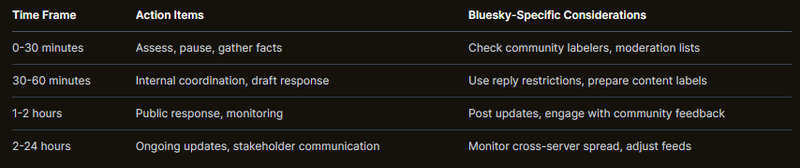
The First 30 Minutes: Critical Response Window
Pause and Assess: The moment you detect a potential crisis, stop all scheduled content immediately. Review your content calendar and pause any posts that might seem insensitive or add fuel to the fire. This prevents the situation from worsening while you gather information and plan your response.
Gather Facts: Use the "5 Ws" framework for quick situation analysis: Who is involved? What exactly happened? When did it occur? Where is the criticism coming from? Why are people upset? This systematic approach prevents emotional reactions and ensures your response addresses the real issues.
Assemble Crisis Team: Designate specific roles immediately: spokesperson for public communications, social media manager for platform-specific actions, and legal advisor for potential legal implications. Clear role assignment prevents confusion and mixed messaging during critical early hours.
Platform-Specific Actions: Utilize Bluesky's unique features like reply restrictions to control conversation flow and content labeling to provide context or warnings on controversial posts. These tools can help manage immediate damage while you prepare a comprehensive response.
Using Bluesky's User Control Features
Reply Management: Strategic use of reply restrictions can prevent conversations from spiraling out of control. Limit replies to people you follow or mentioned in the original post to maintain constructive dialogue while reducing harassment potential.
Content Labeling: Self-labeling controversial content with appropriate warnings demonstrates responsibility and helps users make informed choices about engaging with your content. This proactive approach often reduces negative community reaction.
Moderation Lists: Strategic blocking or muting of bad actors helps protect your community and prevents harassment campaigns from gaining momentum. However, use these tools judiciously as overuse can appear defensive.
Feed Curation: Custom feeds can help you monitor crisis-related conversations while controlling what information reaches your primary audience. Create temporary feeds to track crisis discussions without overwhelming your main content strategy.
Communication Strategy for Decentralized Platforms
Multiple Server Consideration: Remember that your content will persist across the network even after deletion. Frame your crisis communications with this permanence in mind, focusing on transparency rather than attempting to hide or minimize problems.
Community-First Messaging: Respect Bluesky's user empowerment culture by acknowledging community concerns and demonstrating genuine commitment to addressing problems. Avoid corporate-speak or defensive language that conflicts with the platform's authenticity expectations.
Transparency Priority: Provide clear acknowledgment of issues and planned actions. Bluesky users respond positively to honest communication about mistakes and concrete steps for improvement. Vague apologies or deflection tactics typically worsen crisis situations.
Update Frequency: Given the rapid information flow on Bluesky, provide regular communication about your progress in addressing the crisis. Set clear expectations for follow-up communications and meet them consistently.
What NOT to Do During Crisis Response
Don't Delete Without Explanation: Content persistence makes deletion ineffective and often appears suspicious to the community. If you must remove content, explain why and provide context for your decision.
Avoid Defensive Language: Bluesky's community values authentic accountability over defensive justifications. Focus on understanding and addressing concerns rather than protecting your reputation through defensive arguments.
Don't Argue Publicly: Complex discussions should move to direct messages to prevent public escalation. Public arguments often make crisis situations worse by appearing confrontational or dismissive of community concerns.
Skip Generic Apologies: Bluesky users expect specific, thoughtful responses that demonstrate genuine understanding of the problem. Generic "sorry if anyone was offended" language typically increases rather than reduces negative sentiment.
Crafting Authentic Apologies That Work
Elements of Effective Bluesky Apologies
Specific Accountability: Address exactly what went wrong without deflection or minimization. Bluesky users appreciate direct acknowledgment of specific mistakes rather than vague admissions of general wrongdoing. Name the problem clearly and take full responsibility for your role in creating it.
Community Impact Recognition: Acknowledge how your content affected others, particularly marginalized communities or specific groups that may have been harmed. This demonstrates awareness of your content's broader impact beyond immediate followers.
Action-Oriented Solutions: Provide clear, concrete steps you're taking to prevent similar problems in the future. Bluesky users respond better to actionable commitments than promises to "do better" without specific behavioral changes.
Cultural Sensitivity: Demonstrate understanding of Bluesky's community values and norms in your apology language and tone. Avoid corporate-speak or legal language that feels disconnected from authentic human communication.
The CARE Framework for Crisis Communication
Confirm the facts and take responsibility: Start by clearly stating what happened without excuses or deflection. Acknowledge your role in creating the problem and avoid language that minimizes your responsibility or blames others.
Apologize sincerely with specific acknowledgment: Offer a genuine apology that addresses specific harms caused by your content. Avoid conditional language like "if anyone was offended" and instead acknowledge the actual impact of your actions.
Respond with concrete corrective actions: Outline specific steps you're taking immediately and longer-term changes you're implementing to prevent similar problems. Make commitments you can actually keep and follow through on them publicly.
Engage ongoing with the community for feedback: Invite constructive criticism and demonstrate willingness to learn from the community. Ask how you can do better and show genuine interest in community input on your improvement efforts.
Platform-Specific Apology Tactics
Thread vs. Single Post: Use longer threads for complex issues that require detailed explanation, but ensure each post in the thread can stand alone. Single posts work better for straightforward acknowledgments of clear mistakes.
Visual Elements: Consider using images or graphics to convey sincerity and provide additional context, but ensure they enhance rather than distract from your message. Visual elements should feel authentic rather than overly produced.
Community Engagement: Structure your apology to encourage constructive feedback in replies. Ask specific questions about how you can improve and demonstrate genuine interest in community input.
Follow-Up Timeline: Promise specific follow-up communications and deliver on them consistently. Set realistic timelines for updates and meet them to rebuild trust through reliable action.
Common Apology Mistakes to Avoid
Non-Apology Language: Phrases like "if anyone was offended" or "mistakes were made" avoid accountability and often increase negative sentiment. Take direct responsibility with clear, specific language about what you did wrong.
Corporate Speak: Generic PR language feels inauthentic to Bluesky users who value genuine human communication. Write in your natural voice and avoid overly formal or legal-sounding language.
Deflection Tactics: Blaming algorithms, misunderstandings, or other people weakens the credibility of your apology. Focus entirely on your own responsibility and actions rather than external factors.
One-and-Done Approach: Single apologies without follow-through demonstration fail to rebuild trust. Plan for ongoing communication and action that proves your commitment to change over time.
Studies show that authentic apologies with specific corrective actions reduce negative sentiment by 67% compared to generic statements, making the investment in thoughtful crisis communication worthwhile.
Long-Term Reputation Recovery
Rebuilding Trust Through Consistent Action
Behavioral Change Demonstration: Show improved content practices over time through consistent, thoughtful posting that reflects lessons learned from your crisis. Actions speak louder than words, and the community will judge your sincerity based on sustained behavioral change rather than crisis communications alone.
Community Contribution: Add genuine value to conversations beyond self-promotion or business interests. Share helpful resources, amplify other voices, and participate meaningfully in community discussions that matter to your audience.
Transparency Maintenance: Provide regular updates on promised changes and openly discuss your progress, including setbacks or challenges. This ongoing transparency helps rebuild trust by demonstrating continued commitment to improvement.
Patience and Persistence: Understand that reputation recovery takes time in decentralized environments where negative sentiment can persist across multiple servers and communities. Maintain consistent positive behavior even when progress feels slow.
Content Strategy for Recovery
Value-First Approach: Focus your content on helping others rather than promoting yourself or your business. Share useful information, educational resources, and insights that benefit your community without expecting immediate returns.
Community Engagement: Participate meaningfully in relevant conversations by providing thoughtful contributions rather than superficial comments. Show genuine interest in others' content and perspectives to rebuild authentic relationships.
Educational Content: Share lessons learned from your crisis experience to help others avoid similar mistakes. This demonstrates growth while providing value to your community and can help transform negative experiences into positive contributions.
Authenticity Over Perfection: Be genuine in your communications rather than overly polished or calculated. Bluesky users respond better to authentic human expression than perfect corporate messaging.
Monitoring Recovery Progress
Sentiment Tracking: Use available monitoring tools to measure changes in community perception over time. Track mentions, engagement quality, and community feedback to gauge recovery progress objectively.
Engagement Quality: Focus on meaningful interactions and relationship building rather than raw follower numbers or engagement statistics. Quality connections matter more than quantity in sustainable reputation recovery.
Community Feedback: Actively seek input on your improvement efforts through direct questions, polls, or community conversations. Show that you value community input and use feedback to guide your recovery strategy.
Long-term Metrics: Measure trust rebuilding over months and years rather than days or weeks. Set realistic expectations for recovery timelines and celebrate incremental progress while maintaining long-term focus.
When to Seek Professional Help
Legal Implications: When your content crisis involves potential legal consequences, defamation issues, or regulatory concerns, professional legal and PR counsel becomes essential for protecting your interests.
Widespread Media Coverage: Crisis situations that extend beyond Bluesky to traditional media or other major platforms require professional crisis communication expertise to coordinate multi-channel response strategies.
Stakeholder Impact: When your crisis affects investors, business partners, employees, or other stakeholders beyond your immediate social media audience, professional help can manage complex stakeholder communications effectively.
Repeated Incidents: Patterns of crisis situations indicate systematic problems that require professional intervention to identify and address underlying issues causing repeated problems.
Prevention Strategies for Content Success
Understanding Your Bluesky Audience
Community Norms Research: Spend time learning the unwritten rules and cultural expectations of your specific niche within Bluesky. Each community has unique values and sensitivities that may not be obvious from platform-wide guidelines.
Engagement Pattern Analysis: Study what content receives positive responses versus negative reactions in your community. Look beyond basic engagement metrics to understand the types of content that build goodwill versus those that create friction.
Cultural Sensitivity Training: Develop awareness of diverse community perspectives and potential trigger points for different groups within your audience. This includes understanding current events, cultural moments, and ongoing social issues that might affect content reception.
Stakeholder Mapping: Identify influential voices, community leaders, and key stakeholders in your space. Understanding who holds influence in your community helps you anticipate reactions and navigate sensitive topics more effectively.
Content Review and Approval Processes
Multi-Person Review: Implement systems where potentially sensitive content receives evaluation from multiple team members or trusted advisors before publication. Different perspectives can catch problems you might miss alone.
Cultural Context Checking: Ensure content works appropriately across different communities and cultural contexts within your audience. Content that seems fine in one context may be problematic in another.
Timing Considerations: Develop processes for checking current events, trending topics, and community mood before posting. Avoid publishing content during sensitive periods or when community attention is focused on serious issues.
Platform-Specific Adaptation: Tailor content specifically for Bluesky's culture and expectations rather than simply cross-posting from other platforms. What works elsewhere may not translate effectively to Bluesky's unique community dynamics.
Building Positive Community Relationships
Consistent Value Delivery: Provide regular helpful, interesting, or entertaining content that serves your community's needs and interests. Build a reputation for adding value rather than just promoting yourself or your business.
Authentic Engagement: Participate genuinely in community conversations by offering thoughtful comments, asking meaningful questions, and showing real interest in others' perspectives and experiences.
Support and Amplification: Actively promote others' content and achievements within your community. Building goodwill through supporting others creates positive relationships that can provide support during difficult times.
Transparency and Honesty: Build trust through consistent authentic communication about your motivations, challenges, and experiences. Transparency creates stronger relationships and provides credibility during crisis situations.
Crisis Prevention Tools and Tactics
Content Calendar Planning: Use strategic scheduling to avoid posting during sensitive periods or when community attention is focused on serious issues. Plan content themes that align with community values and current events.
Scenario Planning: Prepare for potential controversial topics in your industry by thinking through possible responses and community reactions before issues arise. Having frameworks ready helps you respond appropriately quickly.
Community Guidelines Creation: Establish clear standards for your own content and communicate them transparently. This helps set appropriate expectations and provides frameworks for consistent decision-making.
Regular Audience Check-ins: Ask for feedback from your community about your content and approach before criticism becomes necessary. Proactive feedback gathering helps identify potential problems early.
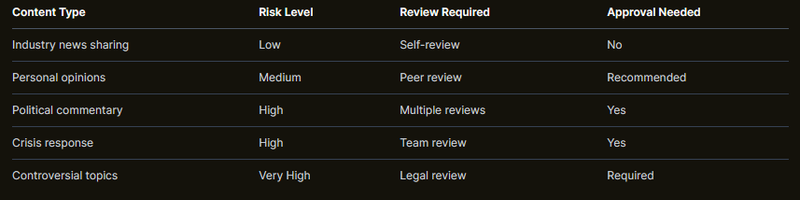
Businesses with proactive content review processes experience 58% fewer social media crises than those without formal procedures, demonstrating the value of prevention-focused approaches.
Building a Crisis-Ready Bluesky Presence
Account Setup for Crisis Resilience
Clear Bio and Purpose: Maintain transparent communication about your account's purpose, values, and approach to content. This clarity helps set appropriate expectations and provides context during difficult situations.
Contact Information: Provide easy ways for people to reach you directly through direct messages or external contact methods. This enables private resolution of issues before they become public crises.
Content Policies: Use pinned posts to explain your approach to sensitive topics, community engagement, and content standards. Clear policies help prevent misunderstandings and provide reference points during controversies.
Community Guidelines: Establish clear expectations for engagement on your content, including how you handle criticism, what behavior you won't tolerate, and how you approach difficult conversations.
Network Building for Support
Industry Relationships: Build positive connections with peers, competitors, and industry colleagues before you need their support. These relationships can provide credibility and backup during crisis situations.
Community Leaders: Engage respectfully with influential voices in your space to build recognition and goodwill. Community leaders can provide valuable perspectives and sometimes help mediate conflicts.
Support Network: Identify allies and advocates within your community who understand your values and might speak up during unfair attacks. Organic community support is more valuable than managed defense.
Professional Connections: Maintain relationships with PR professionals, legal advisors, and crisis communication experts who can provide guidance when situations exceed your expertise.
Documentation and Preparation
Crisis Communication Templates: Develop pre-written frameworks for common crisis scenarios including factual errors, offensive content, and misunderstandings. Templates speed response time while ensuring comprehensive coverage of key points.
Contact Lists: Maintain current emergency contact information for team members, advisors, legal counsel, and other crisis support resources. Quick access to help can make the difference in crisis outcomes.
Legal Guidelines: Understand Bluesky's terms of service, community guidelines, and relevant legal implications for your content and industry. This knowledge helps prevent policy violations and guides crisis responses.
Recovery Playbooks: Create step-by-step guides for different types of crisis situations including immediate response, ongoing communication, and long-term recovery strategies tailored to Bluesky's unique environment.
Regular Assessment and Updates
Monthly Reviews: Evaluate content performance, community feedback, and relationship health on a regular basis. Early identification of developing problems prevents crisis situations.
Policy Updates: Stay current with Bluesky's changing moderation policies, community standards, and platform features that might affect your crisis management approach.
Team Training: Provide regular education on crisis management best practices, platform-specific considerations, and your organization's specific protocols and values.
Technology Updates: Keep monitoring tools, management platforms, and communication systems current to ensure effective crisis response capabilities.
Learning from Bluesky Crisis Case Studies
The Sarah Kendzior Incident: Moderation Overreach
Sarah Kendzior, a respected author and journalist, found herself suspended from Bluesky after referencing Johnny Cash lyrics in a post about political violence. The suspension appeared to result from automated moderation systems that flagged the lyrical reference without considering context, leading to immediate community backlash against perceived overzealous enforcement.
The community response was swift and decisive, with users rallying around Kendzior and criticizing the platform's moderation approach. Many users saw the suspension as evidence of algorithmic bias and lack of human oversight in content moderation decisions.
Bluesky ultimately reinstated Kendzior's account and clarified their moderation policies, acknowledging that context matters in content evaluation. The incident led to improvements in the appeals process and better training for human moderators.
The key lessons learned include the critical importance of context in content moderation, the need for strong appeals processes, and the value of community feedback in identifying moderation errors. This case demonstrated how quickly community sentiment can turn against platform policies perceived as unfair or overly restrictive.
Mark Cuban's Criticism: Echo Chamber Challenges
Mark Cuban's public criticism of Bluesky focused on the platform's ideological homogeneity and perceived hostility to diverse viewpoints. He argued that the community's intolerance to different perspectives created an echo chamber that stifled meaningful discourse and debate.
The community response was mixed, with some users acknowledging the validity of Cuban's concerns while others defended the platform's culture as appropriately progressive and inclusive. This division highlighted ongoing tensions about ideological diversity versus community safety.
Some users, including Cuban himself, returned to X (Twitter) seeking more diverse discourse and less ideological conformity. This exodus raised questions about Bluesky's ability to maintain growth while preserving community cohesion.
The ongoing effects include continued discussions about platform culture, community standards, and the balance between creating safe spaces and enabling open dialogue. The lesson learned emphasizes the importance of fostering inclusive dialogue while managing community expectations about acceptable discourse.
Moderation Policy Overhaul: Communication Crisis
Bluesky's major 2025 moderation changes introduced a new strike system with expanded enforcement categories, but the rollout suffered from poor communication and user confusion about new policies and their implications.
User confusion was widespread, with many community members uncertain about what content would trigger strikes and how the enforcement system would work in practice. This uncertainty created anxiety and defensive behavior that changed community dynamics.
The platform eventually responded with improved transparency, better policy documentation, and clearer enforcement notifications. They also implemented user education initiatives to help community members understand new expectations.
The lessons learned highlight the critical need for clear policy communication, comprehensive user education during major changes, and transparent enforcement processes that help users understand and comply with community standards.
Custom Feed Content Issues
Users began reporting inappropriate content appearing in algorithmic custom feeds, creating frustration with the lack of granular content control and transparency in algorithmic decision-making.
Community response focused on demands for better filtering options, more user control over algorithmic choices, and greater transparency about how custom feeds curate and prioritize content.
Bluesky made platform adjustments including improved filtering options, expanded user control settings, and better documentation of how algorithmic feeds work and can be customized.
The lessons learned emphasize the importance of user empowerment in content curation, the need for transparent algorithmic choices, and the value of providing strong user controls over their social media experience.
Analysis of Bluesky crisis situations shows that 82% were resolved more effectively when the platform prioritized transparent communication over defensive responses, highlighting the value of openness and accountability in crisis management.
Building Resilience in the Decentralized Social Era
Key Success Factors Summary
Speed with Accuracy: Effective Bluesky crisis management requires rapid response balanced with thorough fact-checking and thoughtful consideration. The platform's fast-moving environment demands quick action, but the community's emphasis on authenticity means accuracy cannot be sacrificed for speed.
Platform-Specific Approach: Understanding Bluesky's unique decentralized architecture, community culture, and user empowerment features is essential for effective crisis management. Strategies that work on centralized platforms may fail in Bluesky's federated environment.
Community-First Mindset: Success requires respecting user empowerment and community values while demonstrating genuine commitment to the platform's culture of authenticity and transparency. Top-down crisis management approaches typically fail in this environment.
Long-term Perspective: Building resilience goes beyond managing individual crisis events to creating sustainable relationships and reputation management strategies that work within Bluesky's permanent, decentralized content environment.
The Future of Crisis Management on Bluesky
Changing Moderation: Anticipate continued changes in moderation policies and enforcement approaches as the platform grows and matures. Stay current with policy updates and adapt crisis management strategies accordingly.
Growing User Base: Prepare for more diverse community dynamics as Bluesky expands beyond its current predominantly young, progressive user base. Different audiences may bring different expectations and crisis triggers.
Decentralization Expansion: Understand the implications of broader federated network growth and how content persistence across multiple servers will continue to complicate crisis management strategies.
AI and Automation: Use monitoring and management tools while maintaining the human judgment and authentic communication that Bluesky's community values. Technology should enhance rather than replace genuine engagement.
Final Recommendations
Invest in prevention through deep community understanding and comprehensive content planning. The time spent learning your audience's values, expectations, and sensitivities will prevent far more problems than it costs to implement.
Build crisis response capabilities before you need them by developing templates, processes, and support networks that can act quickly when problems arise. The middle of a crisis is not the time to figure out your response strategy.
Maintain authenticity and transparency in all communications, especially during difficult situations. Bluesky's community rewards genuine accountability and punishes defensive or inauthentic responses consistently.
Learn continuously from both your successes and failures, as well as from other users' crisis experiences. The platform's changing nature means crisis management strategies must adapt constantly.
Remember that reputation recovery is a marathon, not a sprint. Building sustainable credibility requires consistent positive behavior over extended periods, especially after crisis situations that may have lasting effects across the decentralized network.
Start building your crisis-ready Bluesky presence today by implementing the prevention strategies outlined in this guide. Consider tools like BluePilot to help monitor and manage your community engagement proactively, giving you the insights and speed needed to maintain positive relationships in Bluesky's unique environment. For more insights on building a sustainable presence, check out our guide on why smart companies are making the switch to Bluesky for business purposes.
FAQ
Q: How is crisis management different on Bluesky compared to other social media platforms?
A: Bluesky's decentralized architecture means content persists across multiple servers even after deletion, making traditional "remove and move on" strategies ineffective. The platform's community-driven culture also expects more authentic, transparent responses than corporate-style crisis management typically used elsewhere.
Q: What should I do immediately when I notice my content is causing negative reactions on Bluesky?
A: First, pause all scheduled content and assess the situation using the 5 Ws framework. Then, use Bluesky's reply restrictions to control conversation flow while you gather facts and prepare a thoughtful response. Avoid defensive reactions or immediate deletion without explanation.
Q: How long does it typically take to recover from a content crisis on Bluesky?
A: Recovery timelines vary significantly based on crisis severity and response quality, but genuine reputation recovery typically takes 3-6 months of consistent positive behavior. The decentralized nature means negative sentiment can persist longer than on centralized platforms.
Q: Should I delete problematic content or leave it up during a crisis?
A: Generally, avoid deletion without clear explanation since content persists across the decentralized network anyway. If you must remove content for legal or safety reasons, explain why and provide context for the decision. Transparency works better than attempted concealment.
Q: What makes an apology effective on Bluesky specifically?
A: Bluesky users respond best to specific accountability without deflection, recognition of community impact, concrete corrective actions, and ongoing engagement for feedback. Avoid generic "sorry if anyone was offended" language and corporate-speak that feels inauthentic to the community.